Reflection Report: Fulbright Taiwan EMI ASU Workshop Follow-Up Meeting

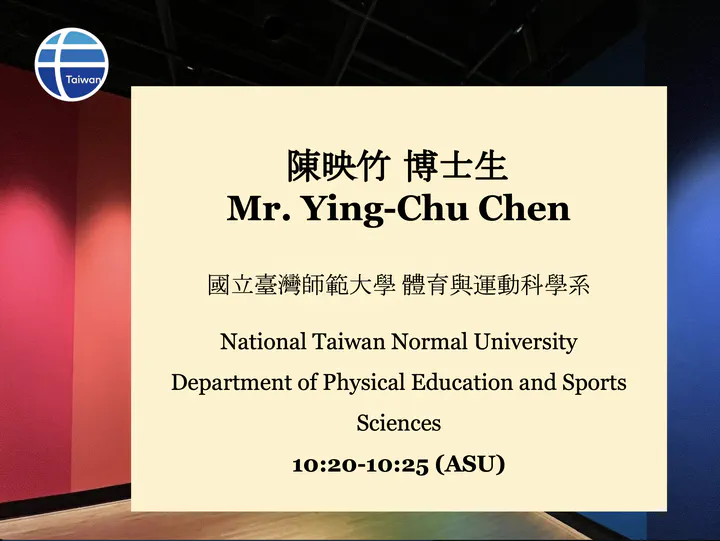 Ying-Chu Chen at the Fulbright EMI Workshop, Arizona State University
Date: May 7, 2026
Subject: Post-Workshop Reflection and Ongoing Implementation
Participant: Ying-Chu Chen
Focus Areas: EMI Program, Professional Development, Global Competence, Syllabus Design
Executive Summary
During the follow-up meeting, we reflected on the lasting impacts of the Fulbright Taiwan EMI Overseas Professional Training Workshop, hosted at Arizona State University (ASU) (January 25 – February 7, 2026). Looking back on those two intensive weeks in Phoenix, Arizona, this reflection centers on how English as a Medium of Instruction (EMI) methodologies—specifically through translanguaging and a focus on educational equity—are actively being integrated into modern, globally connected classrooms.
Approaching this intellectual domain as its own “Minister of Education,” the primary goal remains to govern and elevate the curriculum by bridging the gap between rigorous academic content in specialized scientific domains and accessible bilingual instruction.
Core Pedagogical Reflections & Practical Application
Evaluating the progress since the ASU workshop, several key strategies have proven vital for the modern globalized classroom and are already being actively implemented:
- Outcome-Driven Syllabus Design: A major takeaway is the application of backward design and strategic goal-setting. By establishing concrete learning outcomes first, courses become highly adaptable. For example, in current courses like Weight Training Instruction Methodology at Taipei City University of Science and Technology, the syllabus is tailored so that students learning foundational movements (like the squat) are prepared not just theoretically, but functionally, as future personal trainers and fitness instructors.
- Cultivating Instructional Agility: Flexible bilingual strategies are being utilized to help students navigate complex, highly technical jargon in exercise and health sciences, making concepts like inhibitory control and event-related potentials (ERP) much more accessible.
- Applying Authentic Translanguaging: The focus has shifted away from basic code-switching. Instead, students are encouraged to utilize their complete linguistic repertoires, deepening their grasp of complex scientific theories instead of passively receiving material.
- Driving Educational Equity: By actively dismantling language barriers, students from diverse linguistic backgrounds have an equal platform to engage in high-level, rigorous academic discourse.
“As reaffirmed in today’s reflection, bilingual teaching is far more than alternating between languages—it is a foundational mechanism for advancing both educational equity and global scientific competence.”
Workshop Highlights and Media
POV: Experience the ASU EMI Workshop atmosphere.
Cultural immersion at the Heard Museum during the workshop.
Completion of two weeks of intensive training in Phoenix—officially certified!
May 2026 Sharing Session: Reflections on ASU EMI Training, outcome-driven syllabus design, and ongoing international collaboration.
Bridging Bilingual Theory with Exercise Science
A major focal point of the reflection was the ongoing application of EMI principles to the study of physical activity and cognitive neuroscience. By intentionally cultivating a multilingual academic environment, there is a direct boost in students’ critical thinking skills and their ability to connect with international research networks.
The ASU seminar provided a strong theoretical foundation for this, and the current challenge—which is being successfully navigated—is maintaining the delicate balance between uncompromising academic rigor and linguistic accessibility.
Ongoing Global Connection and Inspiration
The cultural and academic immersion experienced in Phoenix continues to inform current methodologies. Crucially, the workshop sparked ongoing international collaborations. Continuous communication with ASU co-instructors provides a platform to troubleshoot teaching challenges, share classroom experiences, and refine future instructional strategies to ensure better outcomes.
Ultimately, this reflection underscores a sustained commitment to academic innovation. By prioritizing language inclusion and strategic pedagogical planning, we are ensuring that emerging scholars are fully equipped to thrive on the international stage of scientific inquiry.