目標為導向的跨域進程與反思:跨域進化論講座心得 / Purpose-Driven Interdisciplinary Journey and Reflections: Seminar Takeaways
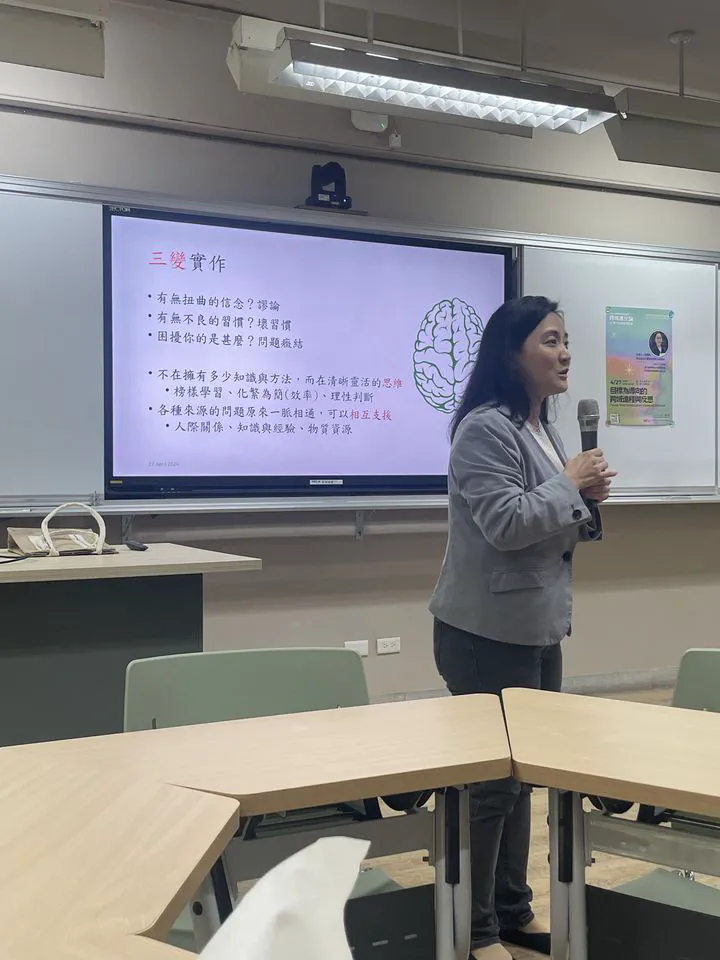 Purpose-Driven Interdisciplinary Journey and Reflections Seminar at NTNU
National Taiwan Normal University (NTNU) / 國立臺灣師範大學
No. 162, Section 1, Heping E. Rd. (和平東路一段162號) - 樸106教室, Taipei City, Da'an Dist. 106
找到意義,比解決問題本身更重要
Finding Meaning is More Important Than Solving the Problem
這次在 4 月 27 日參加了由師大跨領域學習規劃辦公室主辦的「114-2 跨領域學習系列講座」。這場由政大資科系謝佩璇副教授主講的「目標為導向的跨域進程與反思」,完全打破了我對傳統學術職涯講座的想像。 Attending the “114-2 Interdisciplinary Learning Series Seminar” hosted by NTNU’s Interdisciplinary Academic Advising Office on April 27th was an eye-opening experience. The session, titled “Purpose-Driven Interdisciplinary Journey and Reflections” and delivered by Associate Professor Hsieh Pei-Hsuan from NCCU’s Department of Computer Science, completely shattered my expectations of a traditional academic career talk.
講者在螢幕上打出的一句話直擊人心:「找到解決問題的目標和意義,比解決問題本身重要。」她強調做學問與做事都必須「按部就班萬里行程的:以終為始」。身為師大的博士候選人,這句話對我來說超級受用。在進行血流限制訓練(BFR)與認知功能相關的實驗與龐大的數據分析時,我們常常會迷失在研究的細節裡,卻忘了隨時問自己:這項研究的核心目標是什麼?它能為社會或科學界帶來什麼實質的意義? One specific quote on the screen really hit home: “Finding the goal and meaning of solving a problem is more important than solving the problem itself.” She emphasized that in both academia and life, a step-by-step thousand-mile journey must “begin with the end in mind.” As a Ph.D. candidate at NTNU, this advice is incredibly practical. When conducting experiments and running massive data analyses related to Blood Flow Restriction (BFR) and cognitive function, it’s easy to get lost in the details and forget to constantly ask ourselves: What is the core goal of this research? What tangible meaning does it bring to society or the scientific community?
破除框架:三變實作與清晰靈活的思維
Breaking the Mold: Three Changes Implementation and Flexible Thinking
講座中也探討了「三變實作」,引導我們反思自己是否有扭曲的信念(謬論)、不良的習慣(壞習慣),以及困擾我們的問題癥結到底在哪裡。 The lecture also explored the “Three Changes Implementation,” guiding us to reflect on whether we hold distorted beliefs (fallacies), bad habits, and where the crux of our troubling issues truly lies.
謝教授提到,關鍵「不在擁有多少知識與方法,而在清晰靈活的思維下做理性的判斷」。這種將複雜問題化繁為簡的能力,不僅是跨領域學習的核心,更是我們在做實驗設計、甚至是在大學部課堂上運用 EMI(全英語授課)引導學生時,最需要具備的軟實力。 Prof. Hsieh noted that the key “is not about how much knowledge or how many methods you possess, but making rational judgments with clear and flexible thinking.” This ability to simplify complex problems is not only the core of interdisciplinary learning but also the essential soft skill we need when designing experiments or using EMI (English as a Medium of Instruction) to guide undergraduate students in the classroom.
研究生該上的十二堂課:運科魂的共鳴
Twelve Lessons for Graduate Students: A Sports Scientist’s Resonance
最讓我印象深刻的,是簡報中列出的「必勝課:研究生該上的十二堂課」。這十二點涵蓋了從確立正確價值觀、時間管理、表達技巧,一路到團隊合作與人生伴侶的尋找。 The most memorable part for me was the slide on the “Winning Lesson: Twelve Lessons Graduate Students Should Take.” These twelve points covered everything from establishing correct values, time management, and expression skills, all the way to teamwork and finding a life partner.
其中,特別用紅字標示的第五與第六點讓我這個運科人忍不住會心一笑: Among them, the fifth and sixth points, specifically highlighted in red, made the sports scientist in me smile knowingly:
- 如何鍛鍊強健的體魄?—永續經營的養身之道 (How to build a strong body? — Sustainable health management)
- 如何面對壓力?—培養有效的情緒管理 (How to face pressure? — Cultivating effective emotional management)
這完全呼應了我始終抱持的核心理念!沒有強健的體魄跟穩定的情緒,根本無法撐過博士班漫長的跨域進程。 This perfectly echoes the core philosophy of Coach Steve! Without a strong body and stable emotions, it is impossible to survive the long, interdisciplinary journey of a Ph.D. program.
未來應用:在 AI 時代生存與超越
Future Applications: Survival and Beyond in the AI Era
這場講座讓我明白,跨領域不只是把不同科系的知識拼湊在一起,而是一種「目標導向」的思維進化。我會把這些深刻的反思帶入接下來的研究與生活中,帶著強健的體魄與以終為始的心態,繼續迎戰學術與職涯的各種挑戰! This seminar helped me realize that being interdisciplinary isn’t just about piecing together knowledge from different departments; it’s a “purpose-driven” evolution of thinking. I will carry these profound reflections into my upcoming research and daily life, tackling various academic and career challenges with a strong body and a mindset that begins with the end in mind!