Advancing Global Pedagogy: Fulbright Taiwan EMI Workshop at Arizona State University

 Steve Ying-Chu Chen at the Fulbright EMI Workshop, Arizona State University
During the Fulbright Taiwan EMI Overseas Professional Training Workshop at Arizona State University, Steve Ying-Chu Chen immersed himself in modern pedagogical strategies designed for the globalized classroom. From January 25 to February 7, 2026, the workshop focused on how English as a Medium of Instruction (EMI) can be leveraged to enhance learning outcomes without sacrificing content depth—specifically within the specialized fields of exercise science and cognitive neuroscience.
Key Workshop Focus Areas
- Instructional Agility: Utilizing flexible bilingual strategies to help students engage with complex topics and jargon glossary, like inhibitory control and event-related potentials (ERP) in exercise science and health science.
- Translanguaging in Practice: Moving beyond simple code-switching to allow students to draw on their full linguistic repertoire, deepening their understanding of scientific theory.
- Educational Equity: Lowering language barriers to ensure that students from diverse backgrounds can participate equally in high-level academic discourse.
“Bilingual teaching is not just about switching between languages; it’s a powerful tool for promoting educational equity and global competence.”
Workshop Highlights and Media
POV: Experience the ASU EMI Workshop atmosphere.
Cultural immersion at the Heard Museum during the workshop.
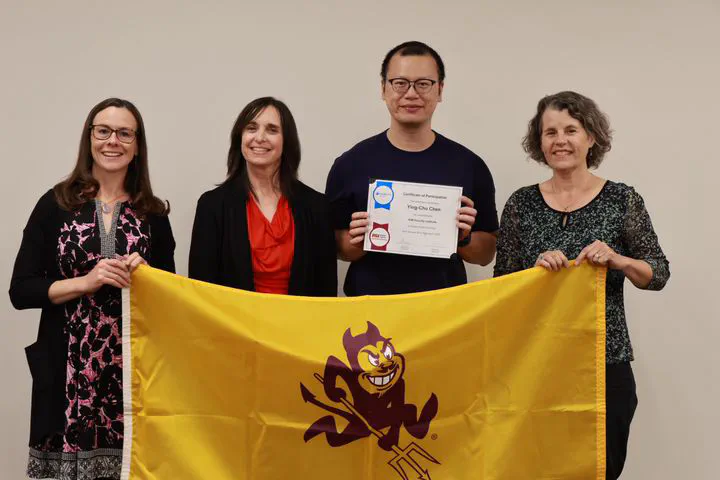
Completion of two weeks of intensive training in Phoenix—officially certified!
Bridging Theory and Exercise Science
Steve demonstrated how EMI principles apply directly to the study of the brain and physical activity. By creating a multilingual environment, instructors can foster critical thinking and a stronger connection to global research networks. The seminar at ASU explored the future of bilingual collaboration, offering practical insights into finding the balance between academic rigor and linguistic accessibility.
This professional development experience underscores a commitment to advancing language inclusion and academic innovation, ensuring that the next generation of scholars is prepared for the international stage of scientific inquiry.